
When GTA homeowners start researching how to protect their windows, they quickly find three very different products competing for attention: steel security bars, security window film, and roller shutters. All three claim to stop or slow a break-in, but they work in completely different ways and suit different situations. Understanding what each one actually does, and where it falls short, is the fastest way to choose the right protection for your home.
Security Film: Holding the Glass Together
Security window film is a clear layer applied to the inside of the glass. Its job is to keep the pane from shattering into pieces, so a window that is struck tends to crack and stay in place rather than collapsing into an open hole.
Where Film Helps
Film can slow an intruder who is trying to smash and reach through, and it adds a measure of safety against flying glass. It is invisible once applied, so it changes nothing about the look of the home.
Where Film Falls Short
Film is only as strong as the frame and the glass it is bonded to. A determined intruder can keep striking, and film does nothing to stop someone from forcing the window open at the latch or working the frame itself. It is a delay, not a physical barrier across the opening.
Roller Shutters: Full Coverage, Full Commitment
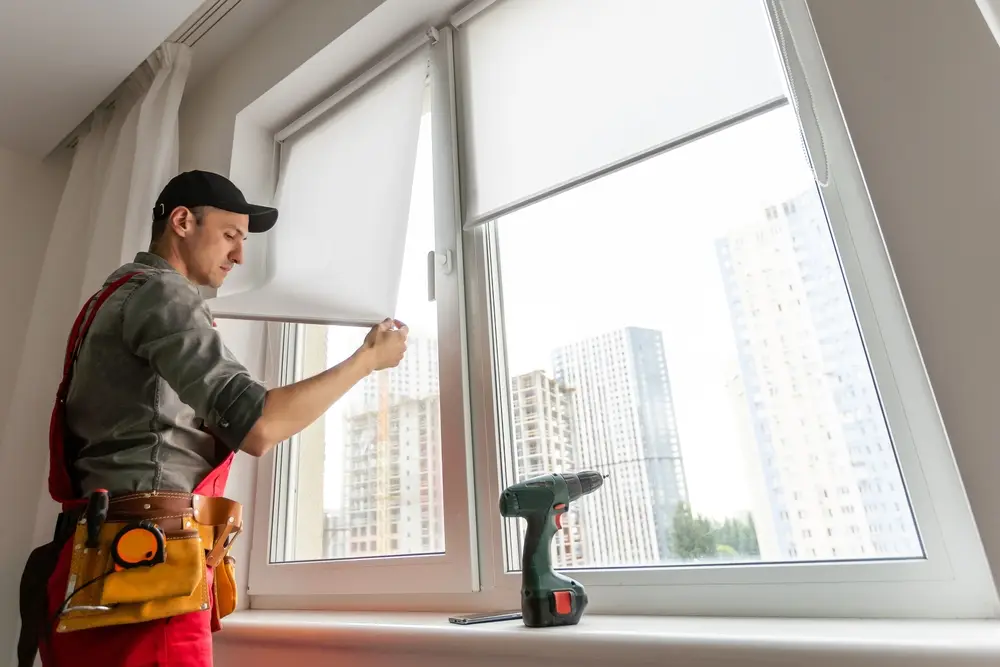
Roller shutters are slatted panels that roll down over the outside of a window to cover it completely. When closed, they present a solid face.
Where Shutters Help
Closed shutters offer strong coverage and block the view into the home. They can also help with sun and insulation.
Where Shutters Fall Short
Shutters only protect when they are closed, which means a window left open for air during the day is unprotected. They are a prominent exterior feature, they add mechanical parts that can fail, and a fully shuttered house can read as closed-up and empty, which is not always the signal a homeowner wants to send.
Security Bars: A Physical Barrier That Stays in Place
Steel security bars take a different approach. Rather than reinforcing the glass or covering the window, they put a solid physical barrier across the opening itself.
Always On
A bar does not need to be closed, activated, or remembered. Whether the window is open for a breeze or shut for the night, the barrier is there. For the ground-floor and basement windows that intruders target most, that constant presence is the main advantage.
Visible Deterrence
Unlike film, bars are visible, and visibility is part of the point. A would-be intruder sees the barrier before trying anything and usually moves on. GTA Security Bars builds custom-fitted steel window security bars that provide that barrier while modern slim profiles keep the look clean.
Safe Exit Built In
The old objection to bars, that they trap people inside, is answered by quick-release and removable designs that let occupants clear the opening in an emergency. That combines a physical barrier with safe egress, something neither film nor a jammed shutter offers on its own.
Choosing for Your Situation
There is no single winner for every window, but the comparison usually points one way for the highest-risk openings.
- For ground-floor, basement, and rear windows, a physical barrier that is always in place is the strongest choice.
- For doors and storefronts, heavy-duty gates and door security bars add protection that locks alone cannot.
- Film can be a useful supplement on glass, and shutters suit homeowners who want full coverage and privacy and will commit to closing them.
Many homes end up layering approaches, but the barrier at the opening is the foundation. GTA Security Bars offers a full range of window, door, and basement solutions, outlined on the services page, so protection can be matched to each opening rather than applied uniformly.
Frequently Asked Questions
Is security film as strong as bars?
No. Film helps hold glass together and slows a smash-and-reach attempt, but it does not place a physical barrier across the opening or stop a window from being forced. Bars provide that barrier directly.
Do I have to close security bars like shutters?
No. That is a key advantage. Bars stay in place whether the window is open or shut, so there is nothing to remember or activate for them to protect the opening.
Can I use more than one of these together?
Yes. Many homeowners layer protection, for example film on the glass plus bars on the highest-risk windows. The physical barrier at the opening is usually treated as the foundation.
Are bars safe if there is a fire?
Quick-release and removable bar designs let occupants clear the opening in an emergency, so bedrooms and egress windows stay safe to exit.
Which option is best for a basement window?
Basement windows are low, hidden, and easy to reach, so a fixed physical barrier is usually the strongest fit, with options available that keep natural light and meet egress requirements.