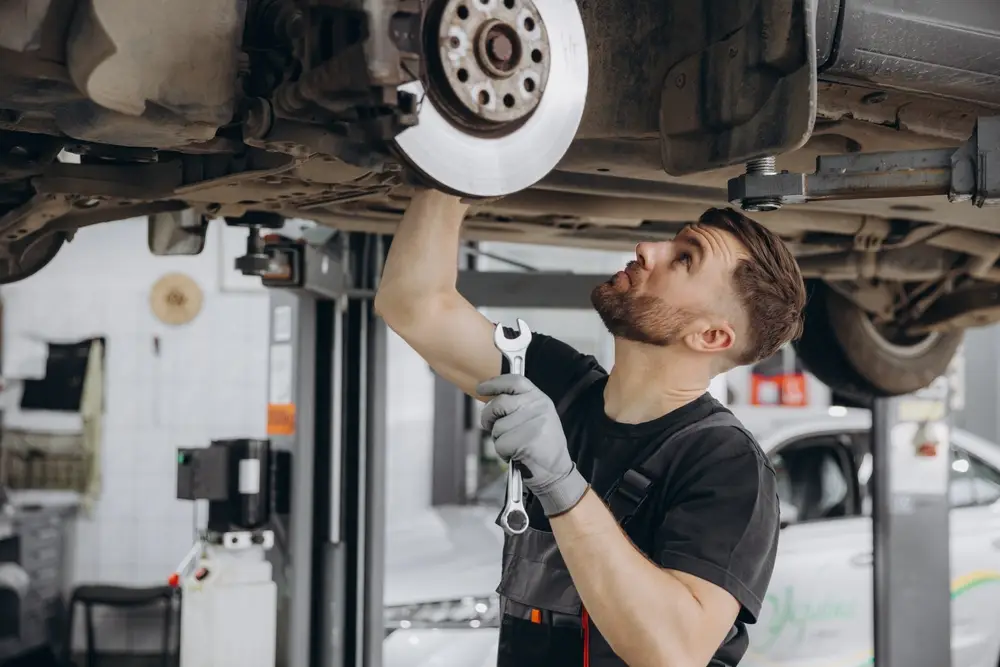

A grinding noise from your brakes grabs your attention immediately. It’s sharp, metallic, and impossible to ignore. German Automotive Airdrie hears this description often, and while it always signals a problem, the severity behind it can vary more than most drivers expect.
The Sound Itself Tells a Story
Grinding differs from squealing in an important way. Specifically, squealing usually comes from a built-in wear indicator designed to warn you early. Grinding, however, often means that warning stage has already passed. Therefore, metal is likely contacting metal, which points to worn-out brake pads or a damaged rotor.
This distinction matters because it affects urgency. A squeal gives you time to schedule a repair. Grinding, on the other hand, suggests the problem needs attention soon, since continued driving in this state accelerates damage to more expensive components like rotors and calipers.
What’s Actually Happening Underneath
Brake pads contain a metal wear indicator that contacts the rotor once the friction material wears too thin. Consequently, that contact creates the grinding sound you hear. If ignored, the pad backing plate eventually meets the rotor directly, which causes deeper scoring and significantly increases repair cost.
Sometimes the cause isn’t the pads at all. For example, debris trapped between the caliper and rotor can create a similar grinding noise. Additionally, a stuck caliper slide pin sometimes causes uneven pad contact, which produces noise even when pad thickness still looks acceptable at first glance.
Why This Isn’t Just a Brake Issue
Braking performance depends on more than pads and rotors alone. Your suspension plays a role too, since it keeps tires planted evenly during hard stops. If your car also feels unstable or pulls during braking, a suspension and brake inspection gives our technicians a complete picture rather than treating symptoms separately.
Furthermore, German-engineered braking systems often work closely with suspension geometry to deliver precise stopping power. Because of this integration, an issue in one system can affect how the other performs. That’s why we always inspect both together when a customer mentions grinding alongside any handling change.
The Risk of Waiting
Continuing to drive on grinding brakes causes cascading damage. Rotors develop grooves that reduce braking efficiency, and in some cases, they can no longer be resurfaced and must be replaced entirely. Meanwhile, calipers can suffer damage from prolonged metal-on-metal contact, adding another expensive repair to the list.
Beyond cost, there’s a safety concern too. Grinding brakes typically mean reduced stopping power, especially during hard or sudden stops. Since summer traffic and road trips increase overall driving frequency, addressing this issue promptly protects both your vehicle and everyone else on the road with you.
How We Diagnose It Properly
Our fully licensed technicians inspect pad thickness, rotor condition, and caliper function before recommending any repair. We’ll show you the parts we remove, so you can see the wear firsthand rather than taking our word alone. This approach has always defined how German Automotive Airdrie operates.
In addition, we check for related issues that might have contributed to premature wear. Sometimes a sticking caliper or worn suspension bushing accelerates pad wear unevenly. Identifying the root cause prevents the same grinding noise from returning again a few months after your repair.
Making Brake Care Routine
Catching brake wear before it grinds is always preferable. That’s why brake inspection belongs in every scheduled maintenance visit, not just when something sounds wrong. Regular checks catch thinning pads while replacement is still simple and affordable, long before metal ever touches metal.
If your brakes are grinding right now, don’t wait for the sound to worsen. Give German Automotive Airdrie a call, and our team will diagnose the cause honestly, explain what we find, and get your stopping power back to where it should be.
Frequently Asked Questions
Is grinding always a sign of worn brake pads? Usually, yes, since grinding often means the wear indicator has already contacted the rotor. However, debris or a stuck caliper can occasionally cause similar sounds, which is why a proper inspection matters before assuming the worst-case cause.
Can I keep driving with grinding brakes? Short distances at low speed are generally survivable, but continued driving accelerates rotor damage and reduces stopping power. We recommend scheduling an inspection as soon as possible rather than waiting for the sound or symptoms to worsen.
Why do my brakes only grind sometimes? Intermittent grinding often points to uneven pad wear or debris that shifts position while driving. This inconsistency doesn’t mean the problem is minor, since uneven wear frequently indicates an underlying caliper or suspension issue worth checking.
Does grinding always mean rotor replacement? Not always. Rotors can sometimes be resurfaced if caught early enough. However, prolonged grinding often causes grooves too deep for resurfacing, which means the timing of your repair directly affects your total cost.
How often should brakes be inspected to avoid this? We recommend checking brake pad thickness at every scheduled maintenance visit, roughly every six months. Catching wear early keeps repairs simple, protects your rotors, and prevents the grinding stage from happening at all.