
Precision machining lives and dies by clean, dry, stable compressed air. CNC machines use air for tool changers, chucks, spindle sealing, air blast chip clearing, and workholding, and any moisture, oil, or particulate carried into those systems shows up as scrapped parts, sticking valves, and unplanned downtime. For machine shops and fabricators in Regina, getting the air system right is not a background utility decision, it is part of holding tolerance and keeping spindles turning.
CFM Air Equipment Canada helps Saskatchewan machining and fabrication shops build compressed air systems that deliver the air quality precision work demands. This article covers what separates shop air from instrument-quality air and how to specify a system that protects your machines.
Why CNC Machines Are So Sensitive
A general shop air line that runs impact wrenches and blow guns can tolerate some moisture and oil. A CNC machining center cannot. Air blast systems spread whatever contamination is in the line directly onto the workpiece and the machine ways. Pneumatic clamps and rotary unions rely on clean, dry air to seal and actuate consistently. Moisture in the line corrodes internal components and, in Regina’s winter, can freeze in outdoor or unheated runs.
The result is that a shop can have plenty of pressure and still have an air quality problem. Solving it means treating the air, not just compressing it. A machine that is starved of clean, dry air will drift out of tolerance long before it throws an obvious fault, so the air system deserves the same attention as the machines it feeds.
Building the Air Quality Chain
Clean instrument-quality air is a chain, and every link matters.
The Right Compressor
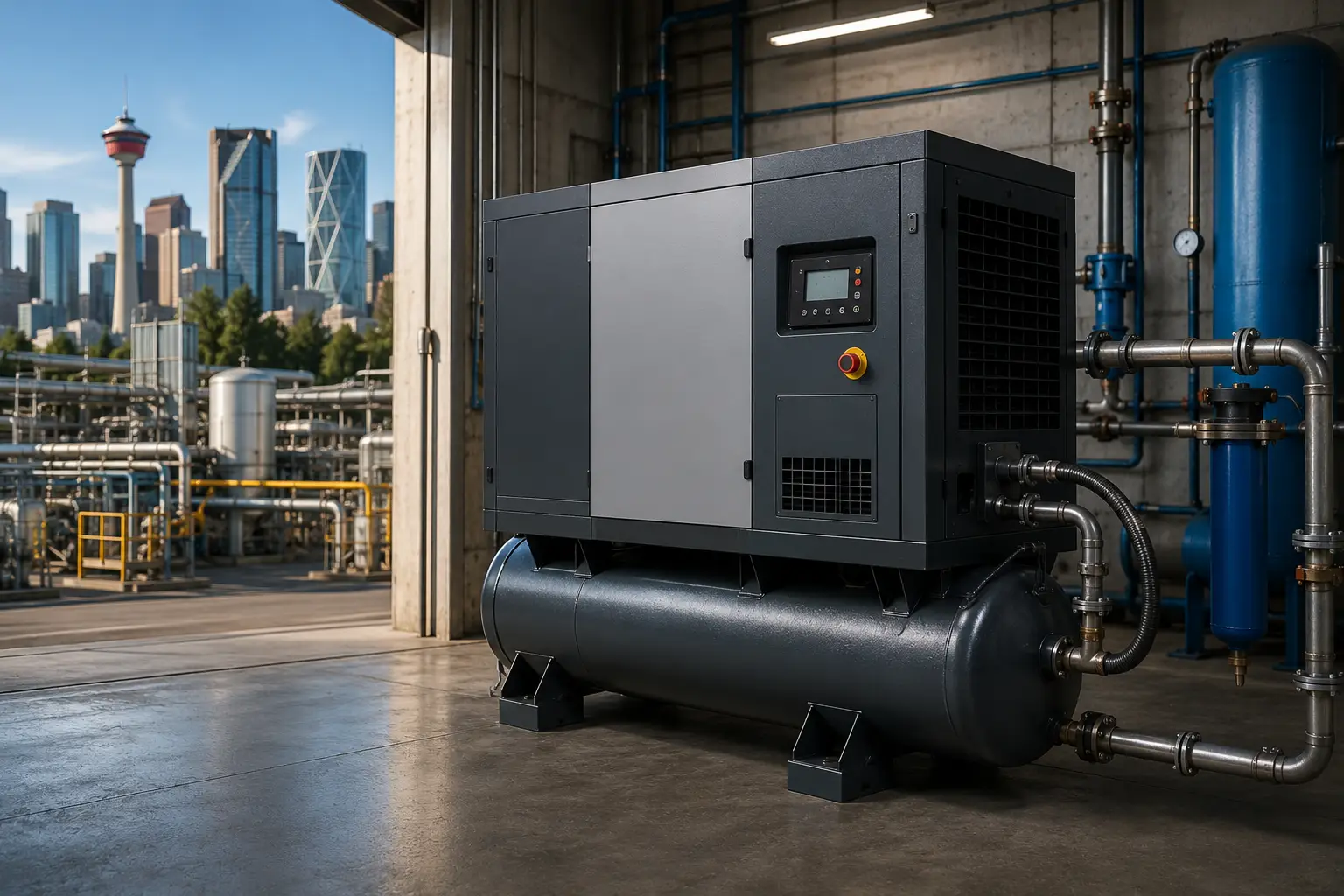
Rotary screw compressors are a common choice for machining operations because they deliver continuous, stable air for the long duty cycles a busy shop runs. For shops evaluating a reliable workhorse, the Chicago Pneumatic compressor lineup covers rotary screw and piston options built for demanding industrial shifts.
Drying the Air
Downstream of the compressor, a dryer removes the moisture that fouls precision components. Refrigerated dryers handle general machining service, while desiccant dryers reach the lower dew points needed where lines run cold or air quality requirements are tighter.
Filtration That Protects Tolerance
Filtration is where instrument-quality air is truly made. Coalescing filters strip oil aerosols and fine water, while particulate filters catch solids before they reach the machine. A well-designed filtration train, such as the setups described in this guide to compressed air filtration systems, makes the difference between air that protects your spindles and air that slowly damages them. Point-of-use protection with quality elements from lines like Walker Filtration adds a final safeguard right at the machine.
Pressure Stability and Piping
Machining tolerances suffer when pressure fluctuates. A correctly sized receiver tank buffers demand spikes when several machines actuate at once, and properly sized piping with smooth layout keeps pressure drop low across the shop. Undersized piping is a hidden cause of pressure loss that operators often blame on the compressor.
Serving Regina Machining Shops
Local support matters when a fabrication shop cannot afford to wait on parts or service. CFM Air Equipment Canada supports Regina machining and fabrication operations with sales, rentals, installation, and service through its Regina location team, so a specification question or a service call gets a fast, local response.
Frequently Asked Questions
What air quality do CNC machines actually need?
They need clean, dry air free of oil aerosols and particulate, with a dew point low enough that moisture never condenses in the lines. That is achieved with a properly sized dryer and a coalescing-plus-particulate filtration train, not the compressor alone.
Why do my pneumatic clamps and valves keep sticking?
Sticking almost always traces to moisture or oil in the air. Adding or upgrading drying and filtration, and maintaining your drains, usually resolves it. CFM Air Equipment Canada can review your existing system and identify the weak link.
Refrigerated or desiccant dryer for a machine shop?
Refrigerated dryers suit most general machining environments. Desiccant dryers are the better choice where lines run through cold areas or where the process demands a very low dew point.
How does pressure drop affect machining?
Unstable or low pressure at the machine can affect clamping force, air blast performance, and tool changes. A correctly sized receiver and properly sized piping keep pressure steady even when multiple machines actuate together.
Can I add point-of-use filtration to an existing system?
Yes. Point-of-use filters are an effective way to add a final layer of protection right at each critical machine, complementing the main filtration at the compressor.
Precision work deserves precision air. With the right compressor, dryer, and filtration chain, Regina machine shops can protect their tolerances and keep production moving. CFM Air Equipment Canada brings the equipment and local service that fabrication and machining operations across Saskatchewan depend on.